
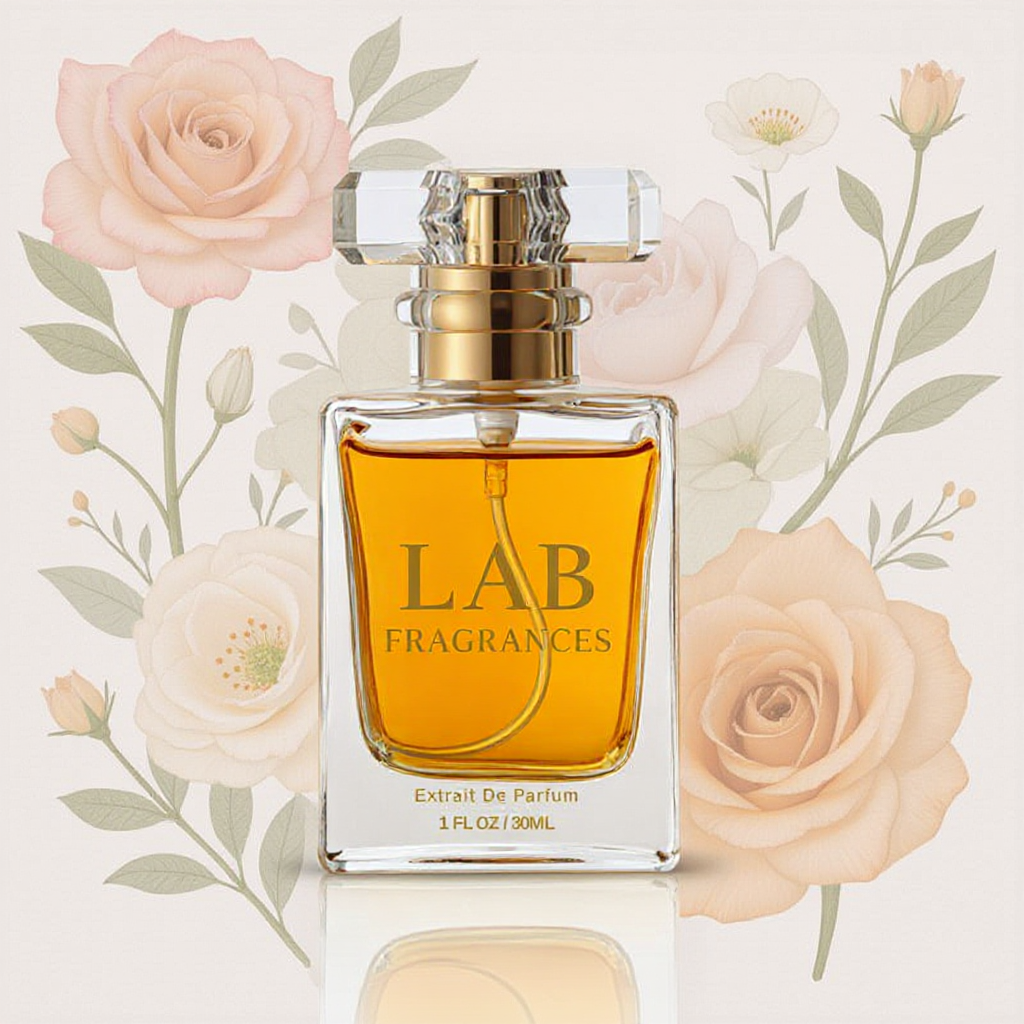
Vegan Perfume Dupes: How to Choose Cruelty-Free Quality
Shopping for vegan perfume dupes means asking two questions at the same time. Does this fragrance capture the scent I love, and was it made in a way I can feel good about? The first question is about craft. The second is about ingredients and testing, and the words printed on labels often say less than they seem to. At LAB Fragrances California, every formula is vegan and cruelty-free, so we care about both questions. This guide explains what those claims should mean on any label, ours included, and how to judge the quality of an inspired fragrance before you buy a full bottle.
In short: Vegan means a perfume contains no animal-derived ingredients, while cruelty-free means it was not tested on animals, so they are two separate claims and the best picks meet both. To judge quality, check that the seller states the concentration, describes the scent, offers sample sizes, uses honest inspired-by wording and publishes its contact details and policies. LAB states that every one of its formulas is vegan and cruelty-free, and every bottle is Extrait de Parfum.
Below, we unpack where animal materials used to show up in perfume, what the law in the United States and in California says about animal testing, and why one claim without the other leaves a gap. Then comes a seven-point checklist you can use on any shop, a straight answer on synthetic ingredients, and a simple way to test a dupe on your own skin for the price of a coffee.
What makes a perfume vegan?
A perfume is vegan when nothing in the bottle comes from an animal. That sounds simple, but perfumery has a long history of borrowing from animals, and some of the most famous notes in the world began that way.
Four classic materials stand out. Musk was taken from a gland of the male musk deer, and you can read the history of musk to see how central it once was. Ambergris is a waxy substance that forms in the digestive system of sperm whales and is sometimes found washed up on beaches. Civet came from the scent glands of the civet, a small mammal, and castoreum from the scent sacs of beavers. All four gave perfumes a warm, animalic depth that helped them cling to skin.
Two other animal materials are gentler but still not vegan. Beeswax is a common base for solid perfumes and balms, and honey or beeswax extracts can add a golden, slightly waxy sweetness to a fragrance. You may also see these in body products sold alongside perfume.
Here is the part that confuses many shoppers: a note name on a label describes a smell, not a source. A perfume can list “musk,” “amber” or “honey” among its notes and still be fully vegan, because modern perfumers can build those effects from plant materials and lab-made molecules. Today, natural musk is rare and tightly restricted, and most of the musky, ambery warmth you smell in contemporary fragrance is synthetic.
So a vegan claim is really a promise about sourcing. If a scent you like lists a warm animalic note, it is fair to ask the seller where that note comes from. A brand that makes vegan perfume should be able to answer without hesitation.
What does cruelty-free mean, legally and in practice?
Cruelty-free is about testing, not ingredients. A cruelty-free fragrance is one that was not tested on animals, either as a finished product or, ideally, at the ingredient stage. The catch is that the word itself has no fixed federal meaning.
According to the FDA on cruelty-free claims, there is no legal definition for phrases such as “cruelty-free” or “not tested on animals” under federal law, which is why companies can use them freely. The FDA also points out that some companies apply these claims only to their finished products while relying on ingredient suppliers or outside labs for any testing. In other words, a claim on the box may not tell the whole story about what happened further up the supply chain.
State law adds a layer. California’s Cruelty-Free Cosmetics Act has been in force since January 1, 2020. In broad terms, it bars manufacturers from selling cosmetics in California if the product or its ingredients were developed or made using animal tests carried out on or after that date, with some exceptions, such as certain tests required by government regulators. A number of other states have since passed similar laws. These rules are a real step forward, but they cover sales in particular states and include exceptions, so they do not replace a clear statement from the brand itself.
You will also see logos from independent certification programs on some products. A logo tells you the brand has gone through that program’s checks. A claim without a logo means you are relying on the brand’s own word, which is why it is worth knowing what to ask. The most useful question is simple: does your cruelty-free claim cover your ingredients and your suppliers, or only the finished bottle?
Vegan vs cruelty-free: why you need both
Because one claim covers ingredients and the other covers testing, each leaves a gap that only the other can fill. The table below sets out what each label tells you, what it leaves out and how to check it.
| Claim | What it covers | What it doesn’t cover | How to check |
|---|---|---|---|
| Vegan | No animal-derived ingredients in the formula | Whether the product or its ingredients were tested on animals | Ask about musk, ambergris, beeswax and honey notes; look for a clear vegan statement from the seller |
| Cruelty-free | No animal testing on the product and, ideally, on its ingredients | Whether the formula contains animal-derived materials | Ask whether the claim includes ingredients and suppliers, not only the finished bottle |
| Vegan and cruelty-free | No animal ingredients and no animal testing | Concentration, longevity or how close the scent is to the one it is inspired by | Read both statements, then judge quality with the checklist below |
| Clean | Whatever the brand defines it to mean | Any single regulated standard | Ask the seller which ingredients it avoids and why |
A quick example shows why both matter. A small brand might never test on animals yet still sell a solid perfume set in beeswax. That product is cruelty-free but not vegan. The reverse can happen too: a formula with no animal materials at all could still include an ingredient that a supplier tested on animals to meet a rule in another market. That product could be described as vegan without being cruelty-free.
Notice what the third row says. Even when both claims are true, neither one tells you anything about quality. A vegan, cruelty-free perfume can still be weak, short-lived or a poor match for the scent it is inspired by. That is where the checklist comes in.
How to choose quality vegan perfume dupes: a 7-point checklist
Ethics narrow the field; quality decides the winner. Run any shop or product through these seven checks before you spend real money, whether you are comparing vegan options or cruelty-free perfume dupes in general. A seller that passes all seven is treating you as a long-term customer rather than a one-time sale.
1. Concentration is stated
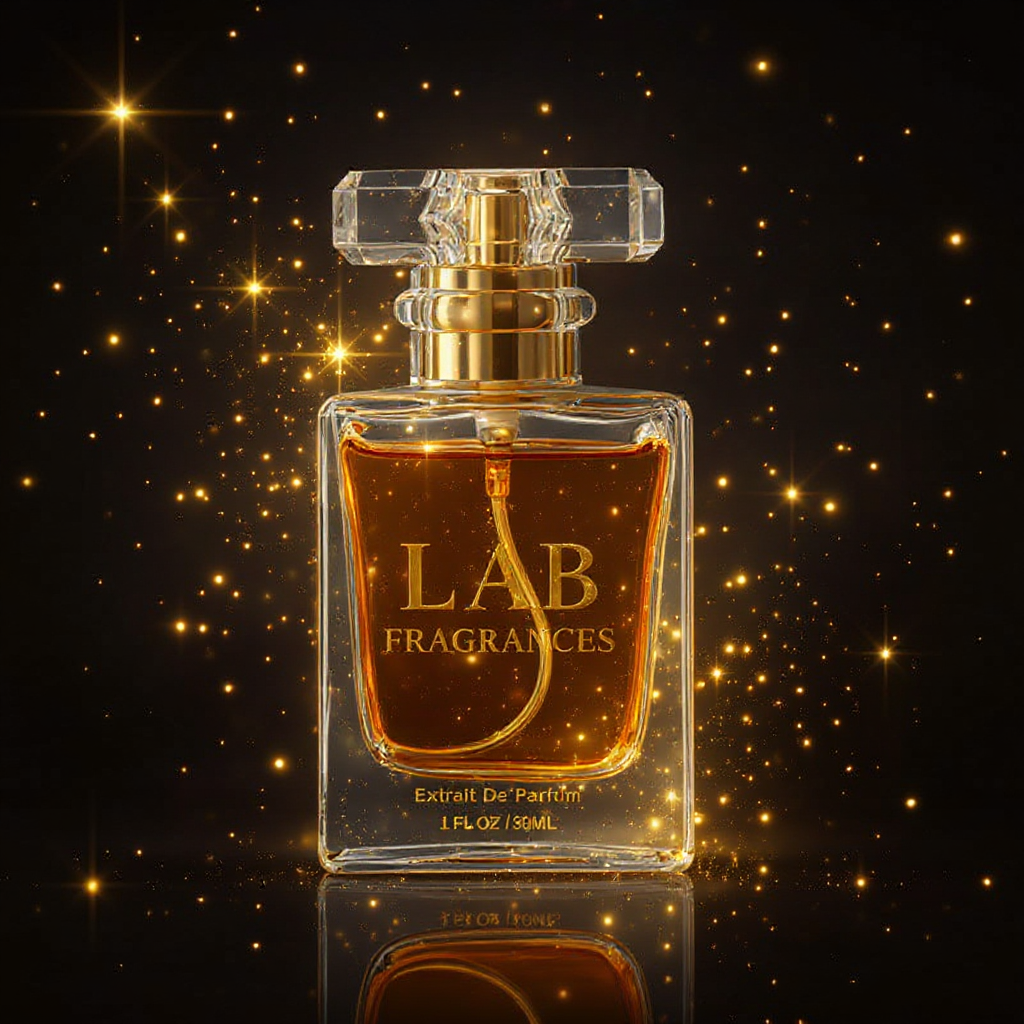
Perfume comes in several strengths. From lightest to richest, the common names are eau de cologne, eau de toilette, eau de parfum and Extrait de Parfum, sometimes called pure perfume. The richer the concentration, the more fragrance material the formula carries, which usually means a fuller scent that stays with you longer.
A trustworthy seller tells you which one you are buying, on the product page and not buried in the fine print. If a listing only says “perfume” or “fragrance” with no strength at all, treat that as a gap. At LAB, every bottle is Extrait de Parfum, from the smallest vial to the largest spray.
2. The scent is described, not just named
A name alone tells you very little. “Inspired by” a famous fragrance is a starting point, not a description, and two dupes of the same original can smell quite different from each other. Look for a seller that lists the main notes, ideally split into opening, heart and base, or at least names the fragrance family, such as floral, woody or amber.
Notes let you predict how a scent will wear across a day and compare options without guessing. They also help you spot a note you know you dislike before it lands on your skin. LAB lists the notes for each fragrance in its library, so you can shortlist by what a scent actually smells like.
3. Sample sizes exist
No description replaces wearing a fragrance. Skin warmth and chemistry change how notes develop, and a scent that smells perfect on a paper strip can turn sharp or flat a few hours later on you. A seller confident in its formulas will let you try a small amount first.
Look for a sample size that is a real spray, not a single dab. At LAB, the 2ml vial is a plastic sample spray that holds enough for several wears. At the time of writing, a vial typically costs $7.99 or $5.99, depending on the scent.
4. ‘Inspired by’ is honest and the seller says it’s not affiliated
An honest inspired-by fragrance is its own blend, created to evoke a well-known scent. It should never pretend to be the original, copy another company’s logo or bottle, or hint at a partnership that does not exist. If you are new to the idea, start with what a perfume dupe is and when one is worth buying.
The clearest sign of honesty is a plain disclaimer stating that the seller is not affiliated with the brands it mentions. Good shops also say openly when they do not carry a version of a particular scent and suggest close alternatives instead. One of our own scent guides is an example of a transparent inspired-by guide that does exactly that.
5. Ingredient and allergen questions get answers
Anyone with sensitive skin or a known allergy should ask pointed questions. Some common fragrance materials, such as linalool, limonene and coumarin, are known to affect sensitive people, and a reputable seller should respond to questions about them rather than dodge.
Test this before you need it. Send a short email asking about a scent you like, and notice how quickly and how clearly the shop replies. A published FAQ is a good sign too, because it shows the seller has thought about what customers want to know. At LAB, you can reach us at info@labfragrances.com with ingredient questions.
6. Policies and contact details are published
A shop that stands behind its products makes itself easy to find. Look for a physical address, a phone number, an email address and published pages for shipping and returns. If the only contact option is a form with no name behind it, think twice.
We wrote a separate piece on what makes a fragrance shop worth trusting if you want a deeper look. For our part, LAB publishes its store address on Arrow Route in Rancho Cucamonga, its phone number, 747 312 8668, and a page setting out our guarantees, along with linked policy pages in the site footer.
7. Real reviews, read for the details
Star ratings are a blunt tool. The useful information sits in the words. Read reviews for longevity, how a scent behaves in hot weather, which size the reviewer bought and whether they reordered. A comment along the lines of “lasted through my whole shift, so I went up a size” tells you far more than five stars with no comment.
Be wary of reviews that all sound alike or praise a product without mentioning how it smells. And remember that one person’s skin is not yours. Reviews should help you build a shortlist, not make the final decision for you.
Are synthetic ingredients a problem?
Not by themselves. “Natural” and “synthetic” describe where a material comes from, not whether it is safe, pleasant or well made. Plenty of natural plant extracts can irritate sensitive skin, and plenty of synthetic molecules are gentle, stable and widely used.
Synthetics are also the reason vegan perfume can exist at scale. Lab-made musks and ambery molecules give perfumers the warmth that animal materials once provided, with no animal involved. They tend to be more consistent from batch to batch than many natural extracts, and they ease the pressure on scarce natural materials that are hard to harvest sustainably.
Safety is assessed material by material. IFRA, the International Fragrance Association, sets standards that restrict or ban specific fragrance materials based on safety assessments, and those standards are widely followed across the fragrance industry. The point to take away is that a material’s safety depends on what it is and how much is used, not on whether it grew in a field or was made in a lab.
If you have very sensitive skin, the practical step is the same either way: try a small amount first, on a small patch of skin, and wait a day before wearing it widely.
How LAB approaches vegan perfume dupes
Everything we sell starts from the same base: LAB states that every formula is vegan and cruelty-free, and our store describes its ingredients as clean. That applies across a library of more than 900 inspired-by fragrances, from fresh citrus and soft musks to warm vanilla and deep amber.
Every spray bottle is Extrait de Parfum, so choosing a smaller size means a smaller amount, not a weaker version. Our perfume body oils are vegan and cruelty-free too. Here is how the range breaks down, with prices at the time of writing. Prices vary by scent, so the list shows two common price tiers. If a site-wide promotion is running, the total at checkout can come out lower than these list prices.
- 2ml sample spray vial (0.06 oz): $7.99 on the higher tier, $5.99 on the lower one. The low-risk way to try a scent.
- 5ml roll-on body oil: $8.99 or $6.99. Oil-based and close to the skin.
- 15ml refillable glass atomizer (0.50 oz): $24.99 or $12.99. A good middle step once you like a scent.
- Boxed 30ml refillable glass atomizer (1 oz): $39.99 or $19.99. Our recommended size and the best value per ml among the sprays.
- 30ml refill bottle: $34.99 or $17.99. This one has no sprayer; you pour it into the glass atomizer you already own.
These are our own blends, inspired by well-known fragrances; LAB Fragrances California is in no way affiliated with the mentioned brands. When you are ready to browse, shop vegan Extrait de Parfum by gender, by perfume type or by the house that inspired the blend, or simply search for a name. Can’t find the fragrance you were hoping for? Send its name to info@labfragrances.com and ask us to add it.
Prefer to sniff before you buy? You can smell the collection in person at our Rancho Cucamonga store, 10722 Arrow Route, Suite 518. Opening times are best checked first, so call 747 312 8668 or send an email before you make the trip.
How to test a vegan dupe before committing
A good test takes a little patience and very little money. Order two or three 2ml vials, then give each one a fair trial on your own skin, one scent per day. Apply it to clean, moisturized skin in the morning and check in at three moments: right after spraying, at lunchtime and once more before bed. The opening tells you the first impression, but the base you notice at night is what you will live with.
If you own the original that a dupe is inspired by, try a side-by-side: one on the inside of each forearm, sniffed at the same intervals. Then wear the dupe alone the next day, because comparing two scents at once can make small differences seem bigger than they are. You are looking for a scent you enjoy wearing, not a perfect copy.

Longevity is the question most people ask about inspired fragrances, and the honest answer depends on concentration, the notes in the base and your skin. Our guide to how long dupes last explains what to expect and how to get more wear from every spray.
A little arithmetic helps here as well. Free shipping starts on orders over $50, and at the time of writing a basket of seven higher-tier vials totals $55.93, while nine lower-tier vials total $53.91. That is enough to test a whole shortlist across two or three fragrance families in one order. Once a scent wins, a 15ml bottle is a sensible next step, and the 30ml refillable atomizer makes sense when you know you will wear it often.
Choosing vegan perfume dupes well comes down to a few clear habits: check both claims, ask direct questions, read the product page closely and let your own skin have the final say.
Frequently Asked Questions
What makes a perfume vegan?
It has to be free of every animal-derived ingredient. That rules out materials such as natural musk, ambergris, civet, castoreum, beeswax and honey extracts. Musky, ambery or honeyed notes can still appear, because modern perfumers recreate them with plant materials and synthetic molecules.
Is ‘cruelty-free’ a legally defined term in the United States?
No. According to the FDA, federal law sets no official meaning for either phrase, so any company may print them. Ask a brand directly whether its claim extends to raw materials and suppliers or stops at the finished bottle.
Can a perfume be cruelty-free but not vegan?
Yes. A company can avoid animal testing entirely and still put beeswax, honey extracts or another animal-derived material in a formula. That perfume is cruelty-free but not vegan. If both matter to you, look for a seller that states both claims clearly.
Are synthetic fragrance ingredients worse than natural ones?
Not by default. Many modern perfume materials are synthetic, including most musks, and they usually vary less from batch to batch than natural extracts, which can irritate skin too. Industry safety standards, such as those published by IFRA, assess each material on its safety rather than on whether it is natural or synthetic.
Does ‘clean’ on a perfume label mean anything specific?
Not in a regulated sense. There is no single legal definition of clean fragrance, so each brand decides what it means. The useful move is to ask what the word is meant to exclude. For our part, we describe our ingredients as clean, and you can email info@labfragrances.com with any questions.
Is musk in perfume taken from animals?
It once was. Natural musk was harvested from the male musk deer, and it is now rare and tightly restricted. Modern perfumery relies widely on synthetic musks, which give a soft, skin-like warmth with no animal involved.
Are vegan perfumes weaker or shorter-lasting?
No. How strong a perfume smells and how long it lasts depend on its concentration and its composition, especially the base notes, not on whether it is vegan. A vegan Extrait de Parfum with a rich base can easily outlast a lighter eau de toilette.
Does California law restrict animal-tested cosmetics?
Yes. The California Cruelty-Free Cosmetics Act took effect on January 1, 2020. Since then, a cosmetic generally cannot be sold in the state if the manufacturer or its suppliers used animal testing on or after that date to develop or make the finished item or any of its ingredients. A few exceptions apply, mainly for tests that regulators require.
What should I do if I react to a fragrance?
Stop using it and gently wash the area with mild soap and water. If redness, itching or swelling does not settle, see a doctor, and get urgent help if you have any trouble breathing. Keep a note of which perfume caused the reaction so you can avoid it in future.
Are LAB body oils vegan too?
Yes. LAB states that its body oils are vegan, cruelty-free and made with clean ingredients, just like its sprays. The 5ml roll-on body oil is usually $8.99 or $6.99 at the time of writing, with the price set by the scent, and it sits close to the skin for a softer wear.
Share this post
Author





Leave a Reply