

How to Layer Perfumes to Create Your Own Scent
Knowing how to layer perfumes turns the bottles you already own into scents no shelf sells. Layering simply means wearing two fragrances together so they read as one, and with a little planning it is the easiest way to create your own scent without a lab or a lesson. At LAB Fragrances California, we think of every layered blend as a pair: one scent that holds it down and one that lights it up.
In short: To layer perfumes, pick one anchor, a warm base scent, and one accent, a brighter scent that shares at least one note with it. Apply the heavier anchor first, start with one spray or touch of each, and adjust the amounts over several days of wear. Write the recipe down so you can repeat it, and use 2ml vials to keep your experiments cheap.
This guide explains that pairing method, walks you through it step by step, and shows which families tend to get along and which tend to fight. You will also see how to use a body oil as your base, how to write down a combination so you can wear it again next month, and when it makes more sense to blend a perfume from scratch.
What does layering perfume actually do?
Every perfume is a finished composition, balanced by its maker to smell a certain way from the first spray to the last trace. When you wear two at once, they meet on your skin and form a third smell that neither bottle has on its own. A sweet vanilla can pick up a sparkle of citrus. A bright floral can gain a warm, lingering trail. A crisp scent that fades by lunch can ride on a denser one that stays into the evening.
Layering changes three things you can notice. It changes character, nudging a scent warmer, fresher, sweeter or drier. It changes shape, because the lighter scent tends to lead in the first hour and the heavier one takes over later. And it can change how long you notice the blend, since a dense base often outlasts a light top. What layering cannot do is rescue a pairing where neither part pleases you. It works best when each scent brings something you enjoy, even if one of them is only pleasant in small doses.
What is the anchor-and-accent method?
The anchor-and-accent method gives each scent in a blend a clear job. Instead of mixing two perfumes and hoping for the best, you decide in advance which one leads and which one supports.
The anchor is the foundation. It is usually the warmer, denser scent, from the amber, vanilla, leather, woody or musky end of the spectrum. Anchors tend to sit closer to the skin and last longer, so they decide what the blend smells like a few hours in.
The accent is the highlight. It is usually brighter and lighter: citrus, herbs, aquatic notes or a fresh floral. Accents shine in the opening, give the blend its first impression, then gradually step back.
The link between the two is a shared note. Perfumes are built from fragrance notes, the individual smells that make up a scent, usually described as top, heart and base. When an anchor and an accent have even one of these in common, such as a citrus, a flower, a wood or a musk, that note acts like a bridge. Your nose reads the pair as one composition rather than as two perfumes competing for attention.
Think of it the way a cook seasons a dish. The anchor is the main ingredient. The accent is the squeeze of lemon or the pinch of spice. The shared note is the reason the seasoning tastes like it belongs. Keep the anchor dominant and the accent smaller, and a pairing has a far better chance of working on the first try.
How to layer perfumes step by step
Here is the method in six steps. Allow a few days for the whole process, because the last two steps only work on real days of wear.
1. Choose an anchor
Start with a scent you already like that has some weight to it. Check its family on the product page: amber, vanilla, spicy, leather, woody and musky blends all make strong anchors. If you only own fresh scents, pick the one that lasts longest on you. Choose an anchor you would happily wear alone, because hours later it will be most of what you smell.
2. Choose an accent that shares a note
Next, look for a lighter scent with at least one note in common with your anchor. Check the family named on each product page, then wear the two on separate wrists for an afternoon and note what they seem to have in common. A vanilla anchor might pair with an accent that also carries vanilla or tonka in its base. A spicy amber might pair with a floral that carries a hint of spice. If you cannot find an exact match, look for neighbors instead: citrus and herbs sit comfortably together, as do flowers and soft fruit, or woods and leather.
3. Apply the heavier scent first
On clean skin, put the anchor on first. Pulse points such as the inner wrists, the sides of the neck and the inner elbows are reliable spots because they stay warm. Let it dry down for a minute or two, then add the accent on top, in the same spots or just beside them. Going heavier first lets the anchor settle into the skin, so the lighter scent sits above it rather than getting buried underneath.
4. Start with one each
Begin with a single spray or touch of each. Extrait de Parfum is concentrated, and two worn together carry more than either does alone. It is far easier to add a second spray tomorrow than to scrub off a blend that is too loud today. If the accent vanishes completely, add one more of it next time. If it takes over, keep the accent at one and add a second spray of the anchor instead.
5. Wear it for a full day before judging
The first five minutes of a layered blend can mislead you, because the bright accent dominates the opening. Wear the combination through a normal day. Check it after ten minutes, after a couple of hours and again in the late afternoon. Your nose also gets used to a scent the longer you wear it, so a quick question to someone nearby, such as “too much or just right?”, is worth more than your own sniff at hour six.
Give a promising pair two or three days before you decide. Change only one thing per day, whether that is the number of sprays, the order or the spots, so you know which change made the difference.
6. Record the recipe
When you get it right, write it down straight away. Memory is unreliable with smell, and “one of the amber, two of the citrus, I think” is hard to rebuild a month later. The recipe card section below shows exactly what to note.
Which scent families layer well together?
Some families get along more easily than others. A fragrance wheel arranges the families in a circle, and neighbors on that circle, or families that balance each other from opposite sides, tend to blend more smoothly. The table below turns that idea into perfume layering combinations you can try with LAB scents. They are ideas to experiment with, not tested formulas, so treat each one as a starting point and adjust the amounts on your own skin.
| Anchor (family) | Accent (family) | What the pairing aims for | Two 2ml vials |
|---|---|---|---|
| Angelic (Amber Vanilla) | 1872 For Him (Citrus Aromatic) | Citrus and herbs lift the vanilla, so a cozy scent opens fresher and suits daytime | $15.98 |
| Moroccan Sand (Amber Spicy) | 1872 Feminine (Floral Fruity) | Petals and fruit soften the spice for a warm floral with a sweeter opening | $15.98 |
| Beluga Leather (Leather) | Water of Gio Profumo (Aromatic Aquatic) | A light touch of aquatic freshness takes the edge off leather for warmer days | $13.98 |
| BR 540 (Amber Floral) | Noble (Floral) | Both have a floral side, so the blend leans more floral while keeping its warmth | $15.98 |
Vial prices are for two 2ml vials at the time of writing, and your cart may show less if a store-wide discount is running. These are our own blends, inspired by well-known fragrances; LAB Fragrances California is in no way affiliated with the mentioned brands. Every spray size is Extrait de Parfum, and every formula is vegan and cruelty-free.
How to read the pairings: Each anchor comes from the warmer side of the wheel and each accent from the lighter side, which is the anchor-and-accent idea in action. The last row is a quieter idea: when the two scents already share a trait, here a floral side, layering deepens what is there rather than adding contrast. Before you order, open each product page and check the family it names. If you already know both scents and can smell a note they share, try that pair first.
Which combinations usually clash?
Layering tends to go wrong when both scents try to do the same job. Three kinds of pairing deserve caution.
- Two loud gourmands. Two sweet, edible scents, say a caramel and a chocolate, rarely add up to something richer. The sweetness stacks, the blend turns cloying, and the details of each disappear into sugar. If you love gourmands, give one a fresh or woody partner instead.
- Two strong florals. Two big, heady flowers worn together can crowd each other until the result smells like a room full of bouquets. A floral usually works better beside a wood, a musk or a citrus. If you do want two florals, keep one clearly in charge and wear the other as a single light spray.
- A sharp aquatic over a heavy oud. Dense, smoky oud and a sharp, watery freshness pull in opposite directions. Instead of a bridge you get a gap, and the two can smell like separate perfumes worn by different people. If you want freshness over a dark base, try a softer citrus or herbal accent.
Other warning signs are easier to fix. If a pair smells harsh, cut the accent to one light spray. If it smells flat, the two may be too alike, so swap the accent for something from a different family. And if a blend feels overwhelming, it is simply too much: use fewer sprays, or move the accent from your skin to your clothing.
How to layer perfumes with a body oil and a spray
Layering body oil and perfume is one of the simplest pairings to get right, because the two formats already behave like an anchor and an accent. Perfume body oils use an oil base and stay near the skin, which makes them a natural foundation. A spray on top adds lift and helps the scent reach the air around you.
The method is the same as with two sprays. Smooth a little oil onto your pulse points first and let it settle for a minute. Then add one spray of your accent over the same spots. The spray shapes the first impression, while the oil keeps the blend going near your skin.
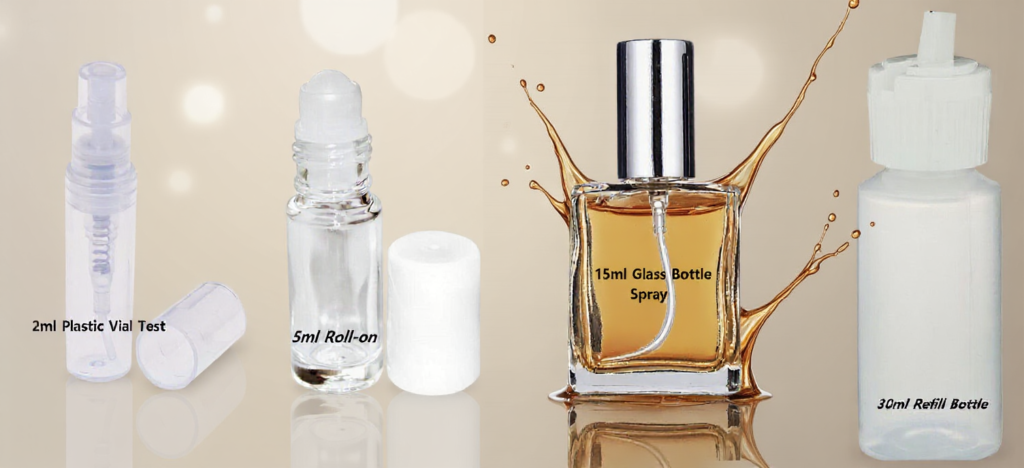
There are two ways to play it. The first is same-scent layering: the oil and the spray of a single LAB scent, which deepens that scent without changing its character. The second is two-scent layering: an oil from the warm side, such as an amber or vanilla blend, under a brighter spray, which follows the anchor-and-accent idea exactly. Our roll-on body oils come in a 5ml roll-on, small enough to keep your anchor in a bag and refresh it during the day. Like the sprays, they are vegan and cruelty-free, and they are made with clean ingredients. At the time of writing, a 5ml oil is priced at $8.99 on the higher tier and $6.99 on the lower one.
One practical tip: oil can mark delicate fabrics, so apply it to skin rather than clothes, and let it absorb before you get dressed.
How do you record and repeat your own scent?
A layered scent only becomes truly yours when you can make it again on purpose. A simple recipe card takes a minute to fill in and saves you from guessing. Keep it in your phone notes, on an index card in the drawer with your bottles, or as a photo of the bottles with the details typed underneath.
Note these details every time:
- Products: the name and format of each scent, for example a 5ml roll-on oil or a 15ml spray.
- Order: which one went on first.
- Spots: where each product went, such as wrists, neck, inner elbows or clothing.
- Count: the number of sprays or touches of each.
- Wait: how long you let the anchor settle before adding the accent.
- Notes: how it smelled at the start, a few hours in and by evening, plus the weather and the occasion.
- Score: a quick rating out of ten, so you can rank your versions.
When you tweak a recipe, write a new version rather than editing the old one. Version two might read “same as before, but the accent on the scarf instead of the wrist.” Over a few weeks you build a small library of your own creations, with clear notes on which ones suit work, evenings or hot weather.
A recipe card also makes buying easier. Once a combination becomes a favorite, you know exactly which two scents to buy in a larger size, and in what proportion you use them. A blend that takes two sprays of the anchor and one of the accent will empty the anchor faster, so that is the one to buy in the bigger bottle.
When should you stop layering and make your own perfume?
Layering is a wonderful way to create your own scent from finished perfumes, but it has limits. Each perfume in your blend keeps its own structure, so you are always working with two complete compositions. A custom blend may suit you better if any of these sound familiar:
- You keep adding a third and fourth scent to chase something you cannot quite reach.
- You love one part of a perfume, such as its base, but never enjoy its opening.
- You want one bottle you can spray in a hurry instead of a two-step routine.
- Your recipe cards keep pointing back to the same few notes.
A make-your-own session begins with scent discovery on blotters and a look at the note pyramid that takes about five minutes, then you pick the materials that appeal to you. Then you blend in small increments while a guide handles the ratios, usually over two or three rounds, before you bottle and name the result. No experience is needed, and the finished blend can be reordered whenever you run low. Your recipe cards help here too, because they show which families and notes you keep coming back to.
You can read more about how to create your own perfume, see how our perfume making class works, or explore custom perfume near me options in Rancho Cucamonga. Sessions are based in Rancho Cucamonga, and we can also run them at venues around the Inland Empire and Los Angeles.
Ready to try your first pairing? Choose an anchor and an accent, order them as 2ml vials and give the combination a few honest days. On the higher price tier, a basket of seven vials totals $55.93 at the time of writing, comfortably past the $50 needed for free shipping, and enough for three pairings plus a spare. If you would rather smell before you buy, drop by the Rancho Cucamonga shop on Arrow Route after checking its hours by phone (747 312 8668) or email (info@labfragrances.com). Or shop all scents and start your first recipe card today.
Frequently Asked Questions
Which perfume goes on first when I layer two sprays?
The heavier, warmer one goes on first, and the lighter one goes on top. Dense scents such as amber, vanilla, leather and woods last longest, so they make the foundation. Brighter citrus, aquatic and soft floral scents sit over them and give the blend its opening.
How many scents can I layer before the result turns muddy?
Two is the sweet spot. A third can work only if it is very quiet, such as a soft musk or a light body oil, and even then a single touch is enough. Beyond that, the individual notes tend to blur and the blend loses its shape.
Can I layer a men’s fragrance with a women’s fragrance?
Yes. Those labels are marketing, not chemistry. Judge each scent by its family and its weight instead. A citrus aromatic scent sold for men can brighten a floral sold for women, and the result belongs to whoever wears it.
Which scent families rarely work well together?
Two heavy gourmands, two loud florals, and a very sharp aquatic sprayed over a dense oud are the usual trouble spots. The first two pile sweetness or petals into one heavy mass, and the last pair work against each other rather than blending.
Can I layer scents from different brands?
Yes. What matters is that the two share a note and that neither drowns the other out. Compare the notes lists, look for an overlap such as vanilla, citrus or a wood, and start with one spray of each.
How do I record a layering combination I love so I can repeat it?
Fill in a short recipe card as soon as you like the result. Note the products, the order you applied them, the spots you used and the number of sprays or touches of each. A photo of the bottles side by side helps too.
Is layering the same as making my own perfume?
No. Layering combines finished scents on your skin, so each one keeps its own structure. A blending session builds a new composition from individual materials, with a guide handling the ratios, and you bottle and name the result.
Should I layer on skin, on clothes, or both?
Both can work. Put the anchor on skin, where your warmth helps it develop and last. The accent can go on skin too, or on a scarf or jacket for a lighter, brighter top layer. Test fabric in a hidden spot first, because some materials can stain.
Can I layer a scent I love with one I don’t like on its own?
Yes. A scent that feels too sharp or too sweet alone can work well as a small accent. One light spray over a warmer anchor can add just the part you enjoy. Keep the amount small and adjust it over a few days.
Can I test layering combinations with 2ml vials?
Yes, and it is the cheapest way to try a pairing. At the time of writing, two 2ml vials cost $15.98 on the higher price tier or $11.98 on the lower one, enough for several days of experiments before you commit to a full bottle.
Share this post
Author




Leave a Reply